New Caledonian honey
A South Pacific island, a flora found nowhere else and protected bees: everything you need to know about New Caledonian honey, from its terroirs to tasting.
Why New Caledonian honey is unique
A flora found nowhere else
New Caledonia is home to one of the most distinctive floras on the planet: nearly three in four plant species exist nowhere else. Its bees forage on flowers unique to the island.
Varroa-free bees
The archipelago is one of the few places still spared by Varroa, a mite that affects bees in most countries. Caledonian beekeepers work every day to protect this rare asset.
An isolated, protected archipelago
Around 1,200 km east of Australia, New Caledonia enforces strict biosecurity rules that protect its apiaries. A rare situation that makes New Caledonian honey a precious product.
The terroirs of New Caledonian honey
The west coast
Niaouli savannahs, plains and forests: the beekeeping heart of Grande Terre.
- Niaouli honey Dumbéa
- Forest honey Bourail · La Foa
- Wildflower honey Poya · Moindou
- Mango blossom honey Pouembout
- Mangrove honey Voh
The east coast
Wetter and greener, home to orchards and gardens.
- Lemon blossom honey Poindimié
- Lychee honey Houaïlou
The far north
Hot and dry, around Koumac, between mining ranges and eucalyptus.
- Eucalyptus honey Koumac
OROA's 9 honeys, from mildest to most intense
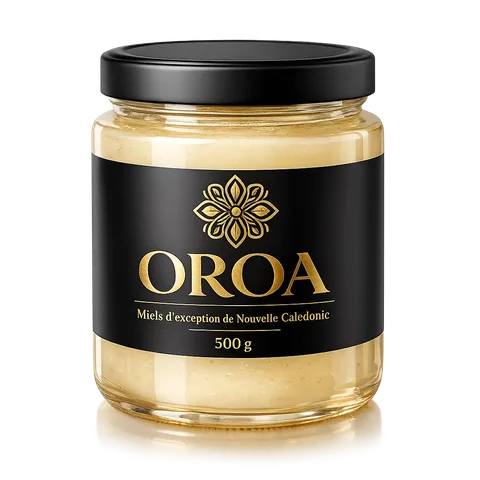
Niaouli honey
A pale hue and floral sweetness, the pure expression of New Caledonia's emblematic tree.
Discover this honey →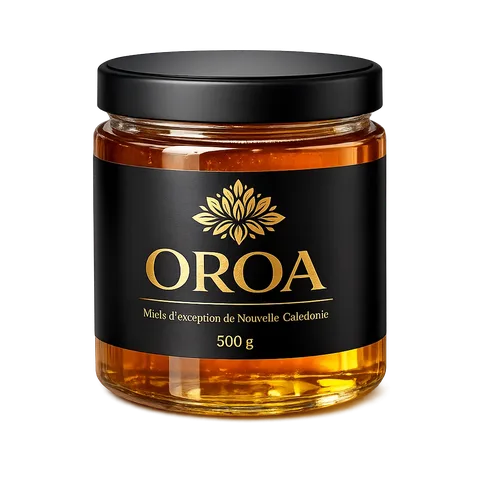
Wildflower honey
A natural blend of Caledonian nectars: soft, round and versatile.
Discover this honey →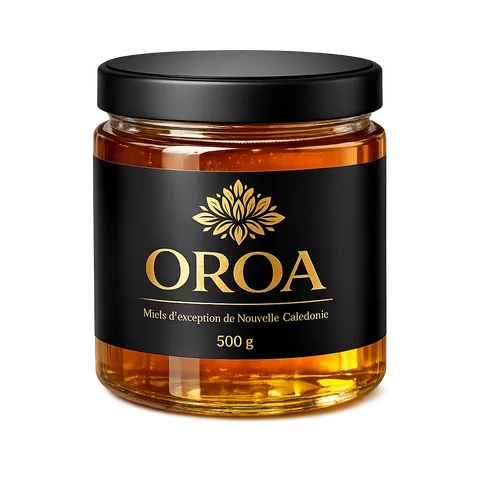
Lemon blossom honey
A vivid honey with citrus aromas and an immediate freshness.
Discover this honey →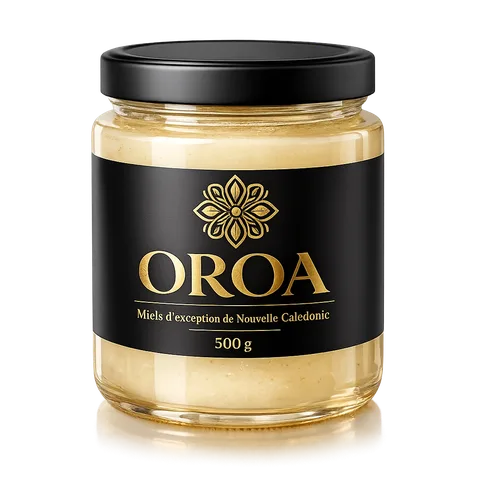
Lychee honey
A delicate honey with exotic lychee aromas, in limited edition.
Discover this honey →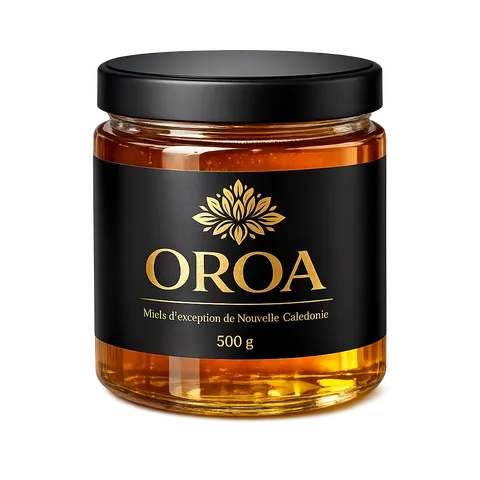
Mango blossom honey
An indulgent honey with fruity notes, harvested in mango orchards.
Discover this honey →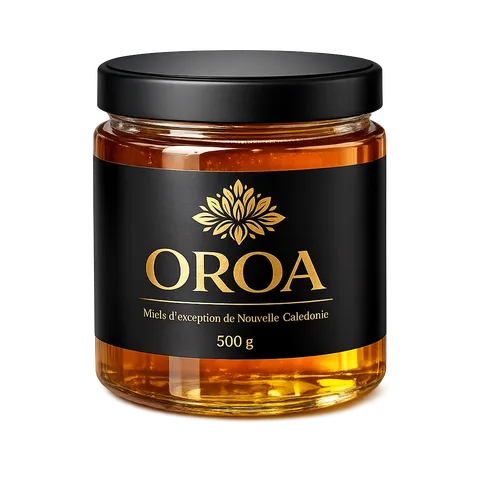
Mangrove honey
A rare honey with briny notes, harvested in the heart of the lagoon's mangroves.
Discover this honey →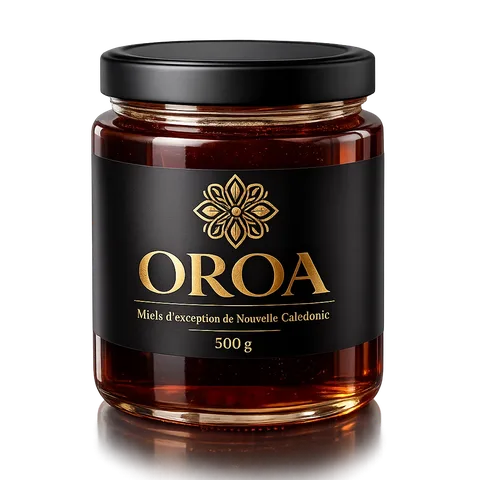
Eucalyptus honey
A bold honey with menthol notes, from the eucalyptus of the far north.
Discover this honey →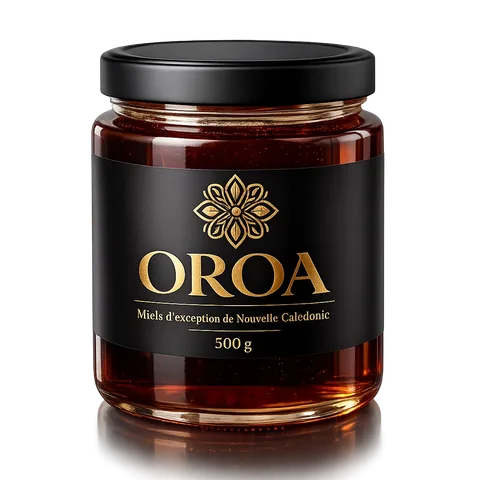
Tamarind honey
A rare honey with spiced notes, from century-old tamarind trees.
Discover this honey →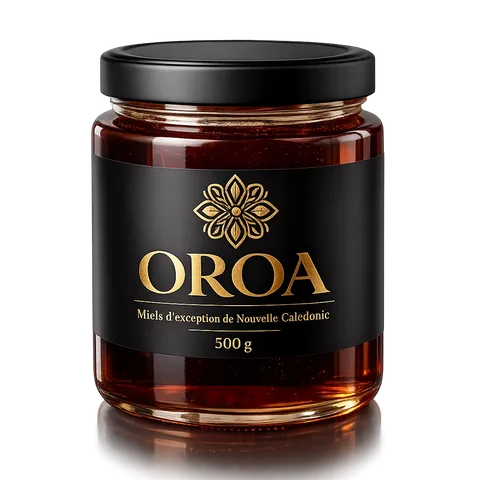
Forest honey
Harvested at the forest's edge, intense and complex: a dark honey of character.
Discover this honey →Crystallisation, the sign of a natural honey
Almost every honey eventually crystallises: it is a natural process linked to its sugar content. The richer a honey is in glucose, the faster and finer it crystallises, like niaouli honey. The richer it is in fructose, the longer it stays runny.
Crystallisation is fastest in cool conditions, around 14 °C. It changes neither taste nor quality; on the contrary, it shows the honey has not been heated. To make it runny again, stand the jar in a warm water bath, without exceeding 40 °C.
How to store honey
Keep the jar tightly closed, at room temperature, away from heat, light and moisture. Honey easily absorbs moisture and odours: close it after each use and use a clean, dry spoon. There is no need to refrigerate it: cold speeds up crystallisation.
How to recognise quality New Caledonian honey
- A precise origin The commune of harvest is stated, not just “New Caledonia”.
- An identified beekeeper You know who harvested the honey and where the hives are.
- No additives Pure honey contains no added sugar, flavouring or syrup.
- A certification The organic label guarantees inspected practices.
- Natural crystallisation A honey that crystallises over time is a living, unheated honey.
New Caledonian honey: frequently asked questions
All OROA honeys are certified organic (AB / EU). The archipelago's isolation and biosecurity rules also help protect Caledonian apiaries.
Niaouli honey, from the emblematic tree of the Caledonian landscape. Pale and floral, it naturally crystallises into a creamy texture.
Yes. OROA packages and exports New Caledonian honeys to Asia and the Pacific, with logistics extending to Europe, the Middle East and Africa. We sell exclusively to trade buyers, on quotation.
Absolutely. Crystallisation is a natural process that changes neither the taste nor the qualities of honey. A warm water bath (below 40 °C) is enough to make it runnier.
Are you a trade buyer?
Importers, distributors, delicatessens, hotels: see our terms and request a quote.