 Organic AB / EU
Niaouli honey
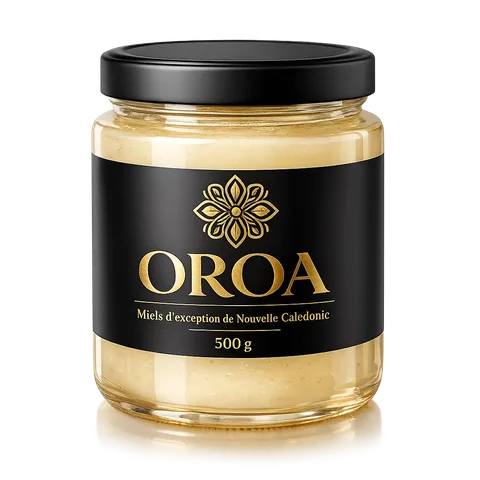
New Caledonia's emblematic tree gives a pale honey with delicate floral notes, which naturally crystallises into a fine, creamy texture.
- Origin
- Dumbéa, New Caledonia
- Harvested by
- Caroline Faivre
- Certification
- Certified organic (AB / EU)
- Intensity
- Mild
Trade sales only: importers, distributors, delicatessens, hotels and restaurants.
What niaouli honey tastes like
The niaouli (Melaleuca quinquenervia) is New Caledonia's signature tree, recognisable by its white, papery bark across the savannahs of the west coast. Its bottlebrush flowers, rich in nectar, give a honey of character that is inseparable from the Caledonian landscape.
OROA's niaouli honey is harvested in Dumbéa by Caroline Faivre, a certified organic beekeeper whose bees are free of the Varroa mite. Unpasteurised and free of any additive, it keeps the full character of its blossom.
Where our niaouli honey comes from
Dumbéa, on the doorstep of Nouméa
On the doorstep of Nouméa, the commune of Dumbéa combines valleys, rivers and hills where the niaouli grows. Caroline Faivre manages her hives there to organic standards, with daily vigilance to keep her colonies Varroa-free.
See the terroir map →How to enjoy niaouli honey
Tea & drinks
In green tea, a lemongrass infusion or hot lemon water: its floral sweetness rounds out the drink without masking it.
In the kitchen
On fresh bread, stirred into plain yoghurt, in a lemon vinaigrette or to glaze roasted vegetables.
Everyday rituals
A spoonful on its own to enjoy its creamy texture, or in an evening herbal tea: a small Caledonian ritual.
Niaouli honey for trade buyers
OROA supplies importers, distributors, delicatessens, hotels and restaurants. Sold on quotation only.
- Jar sizes
- 140 g, 250 g and 400 g jars
- Certification
- Certified organic (AB / EU)
- Traceability
- Down to the commune and the beekeeper
- Testing
- Laboratory analyses (pollen, residues, moisture)
- Ordering
- On quotation, minimum volumes depend on destination
- Ideal for
- Delicatessens, organic stores, Pacific-themed gift boxes
Niaouli honey: frequently asked questions
No. Manuka comes from Leptospermum scoparium, in New Zealand and Australia. Niaouli (Melaleuca quinquenervia) is a botanical cousin from the same Myrtaceae family, and the emblematic tree of New Caledonia. They are two different honeys, each with its own identity.
That is natural crystallisation, the sign of a raw, unheated honey. Niaouli honey crystallises finely into a creamy texture. To make it runnier, stand the jar in a warm water bath for a few minutes, without exceeding 40 °C.
Yes. Like our whole range, it is certified organic (AB / EU). It is traced back to its commune of origin, Dumbéa, and to its beekeeper, Caroline Faivre.
OROA sells exclusively to trade buyers: importers, distributors, delicatessens, hotels and restaurants. Send us a quote request using the form below or on WhatsApp, stating your country and volumes, and we will come back to you with a tailored proposal. Available jar sizes: 140 g, 250 g and 400 g.
You may also like
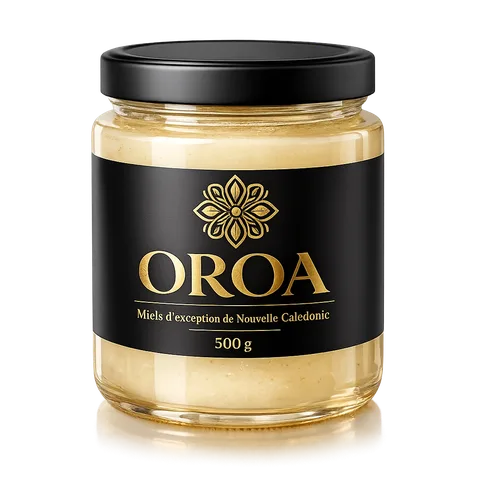
Lychee honey
A delicate honey with exotic lychee aromas, in limited edition.
Discover this honey →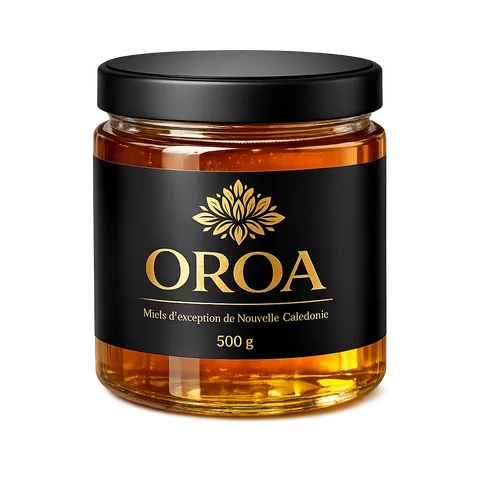
Lemon blossom honey
A vivid honey with citrus aromas and an immediate freshness.
Discover this honey →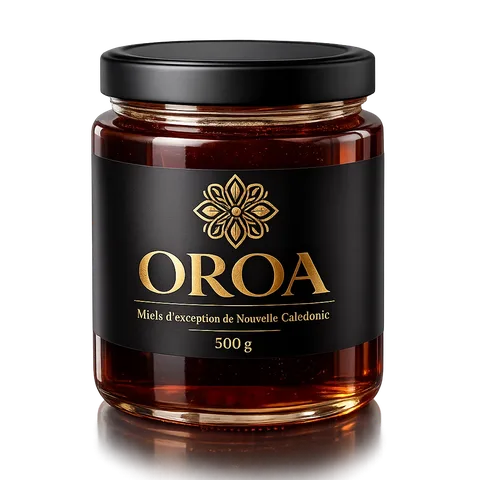
Eucalyptus honey
A bold honey with menthol notes, from the eucalyptus of the far north.
Discover this honey →Request a quote: Niaouli honey
Tell us about your business and expected volumes: we'll get back to you within 48 hours with a tailored price proposal.